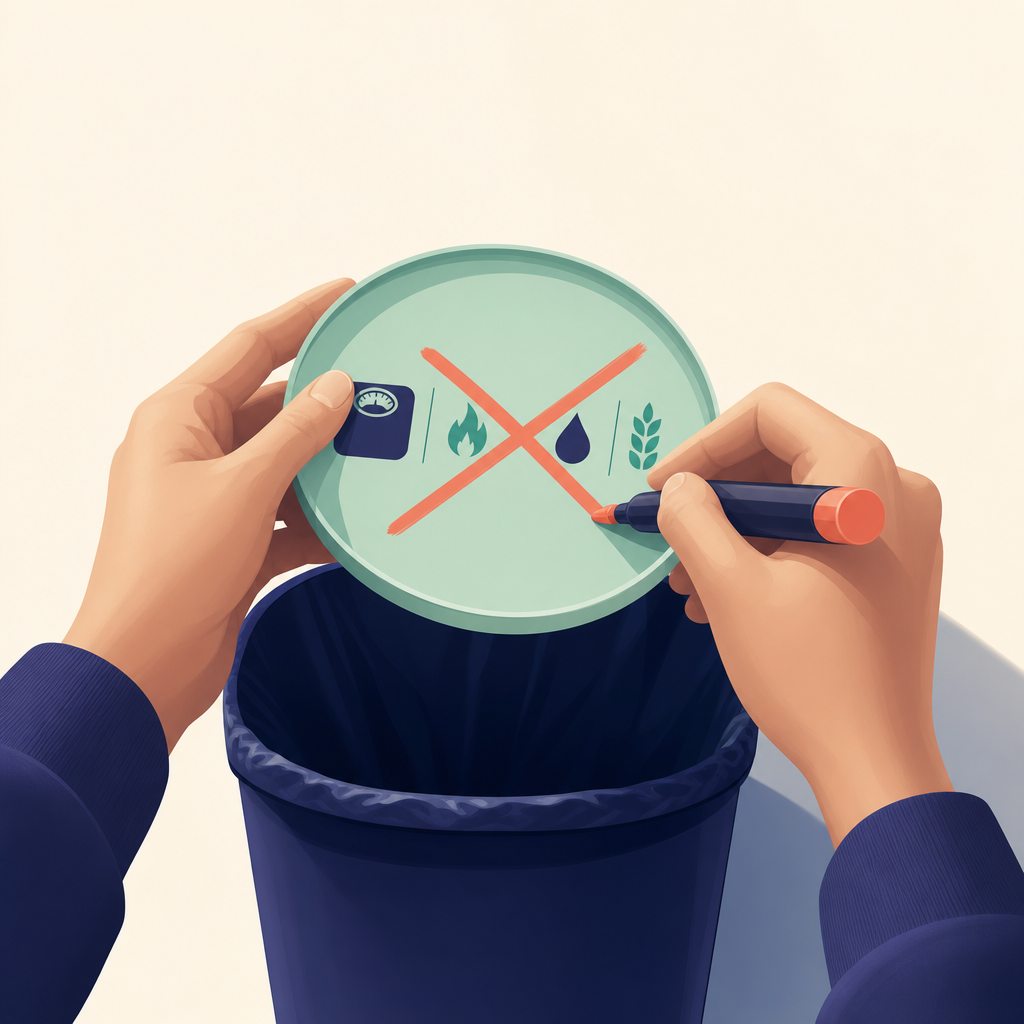
Four years ago, I was obsessed with calorie counting.
I have to say it took me at least two years and a bit to break out of that habit, and it wasn’t an easy one to let go off.
I remembered after losing 20 kilos, I was stuck on how much and how often I should be eating that my healthy eating efforts back-fired on me. The obsession took me through a series of binge-eating episodes and weight gain due to the high stress levels and lack of sleep.
Thankfully, over the years, I figured out how to let the obsession go.
And if there’s something close to my heart when it comes to nutrition, this will be it.
I know most of us want the easy and fastest way out but I believe that if something comes to you easy, it’ll be removed out of you easily too. Which is why when a client comes to me asking me how do I lose weight fast, the first question I ask them is — How long do you want to live?
See, our health is the only thing that will stay with us all the way from the day we were born to the day we die. And I think it deserves much more attention than we’re currently giving.
If you’re hoping to lose fat, make gaining health your priority too.
Think about the lifetime of abundance if you have better health.
Think about how your body can reward you if you have better health.
And think about how easier it is for the people around you if you have better health.
And once you’ve done that, let’s start with cleaning your nutrition up.
Eating To Lose Fat
Losing fat may be hard, but it does not have to be hard.
Forget counting calories. Forget low-carbohydrate diets. Forget any kind of diets for that matter. Eating healthy to lose fat is achievable.
Even better: Eating your favourite foods when you’re trying to lose fat is possible.
I mean it when I say you don’t have to just eat chicken breasts and salads all day. You can still have your desserts, but you have to be aware of what you’re eating and when.
These five simple eating principles for weight loss is not my own invention. In fact, it’s been around for a while. Researchers at Precision Nutrition uses a similar approach. I do in my own life.
Toss the counting out and focus more on how you feel in life and see outstanding results to your body fat measurements.
1. Listen to your body and eat when you’re hungry.
So many of us get too caught up in eating regularly. We’re obsessed at eating every 3 hours and then complain that we’re tired if we don’t. Believe it or not, unless we’re building muscle and we do need to constantly feed our muscles with nutrients, research has shown that nutrition timing for fat loss is not that important.
It’s you that is important.
What I mean by that is this: The number one rule when it comes to fat loss and losing weight is to listen to your body and follow what it says.
For many years we are told to eat regularly and I can only find one good reason for that — so that we don’t overeat at our next meal.
But, some people just do not overeat.
If you find yourself constantly overeating at lunch because you did not have anything to eat at 10am, then have a mid-morning snack in order to prevent that.
Some people need a mid-morning snack but not a mid-afternoon snack.
Some people can go without both, and some of us need a snack between our meals all the time.
I for example need a mid-afternoon snack, or else I will start reaching out for undesirable foods.
Another thing when it comes to eating when you’re hungry is the fact that most times, we are just not hungry. Sometimes we’re just bored and other times, we’re simply just thirsty. Yes it happens.
I have a client who always says she needs to eat something at 3pm because she’s bored. As a result, she will keep a drawer full of undesirable snacks (think mini fun-sized snickers and such).
Eating when you’re bored is not eating when you’re hungry.
Eating when you’re bored means you’re eating mindlessly.
If you find yourself eating mindlessly, keep a food diary for at least a week and be honest with it.
One last thing, try not to confuse hunger with thirst.
If you normally eat breakfast at 7am, lunch at 1pm, a snack at 4pm and then dinner at 8pm and then you wonder why you feel hungry on a certain day at 6pm, chances are you’re thirsty.
The amazing thing about our body is called adaptation. If you’re already eating at regular timings, chances are you won’t get hungry at other unusual timings.
If you find yourself becoming hungry at an unusual time, have at least a glass of water and then wait for 15 minutes.
If you’re still hungry and your stomach is grumbling, chances are you’re hungry. In that case, grab a high-protein and high-fat snack.
If your hunger pang just went away, congratulations you have just hydrated yourself. Now wait for your next meal at 8pm.
2. Have a palm sized (or two palm sized) of protein at every meal.
Growing up in an Asian family means I’m simply not used to eating enough protein. When I was first told to increase my protein intake, I was shocked looking at how much protein I have to consume every day.
But here’s the thing: In order for you to lose fat, you have to increase your protein intake.
Protein has been shown to reduce hunger by filling you up and making you feel satisfied and ultimately eat less in your other meals.
Researchers from the University of Missouri found that eating a high-protein breakfast made their subjects feel fuller throughout the day and thus ate a smaller dinner.
There was also a significant drop in ghrelin, which is a hunger-stimulation hormone, and an increase in PYY, a satiety-stimulating hormone (the type of things that signals your body that you’re full).
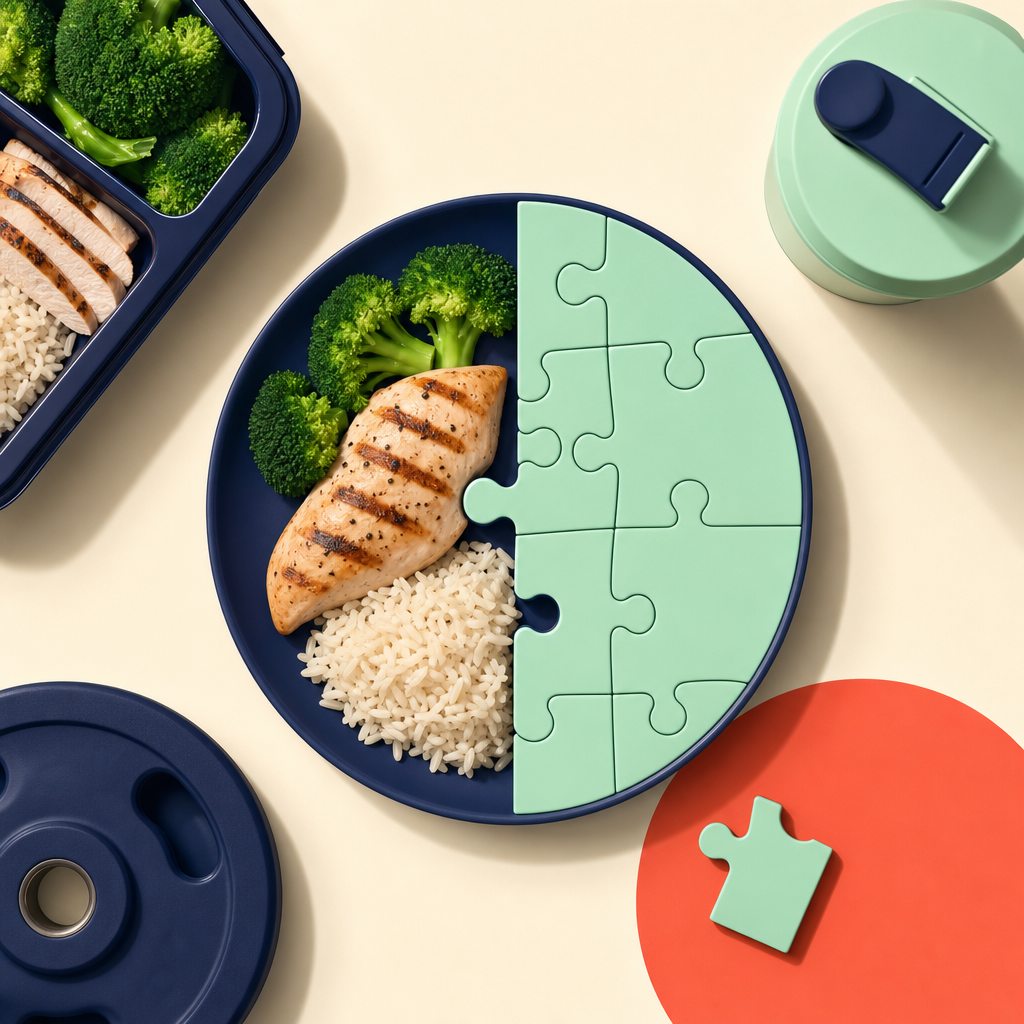
Now you don’t have to worry so much at this point on exactly how much protein you should be eating in grams. All you have to do to make sure you’re consuming enough protein for your body is to have a palm-sized of protein at every meal if you’re a lady and two-palm sized of protein at every meal if you’re a man.
That’s protein for breakfast, lunch, dinner and optionally, your snacks too.
3. Have one fist sized of veggies at every meal.
Remember how our parents will always complain if we toss aside our veggies when we were younger? Or in fact, how do you feel when your kids do that?
Vegetables are important in a balanced diet and especially so if fat loss is your main goal.
Vegetables are also considered a carbohydrate. However, unlike bread, rice and pasta, they are not powerful enough to elevate your blood sugar levels to cause any significant sugar crash. In fact, vegetables contain all the amazing vitamins, nutrients and everything else you need to keep your insides healthy and happy.
Forget green detoxes.
Forget green supplements.
Learn how to eat your veggies.
I know some of you may say that you simply just don’t eat vegetables and fair enough, some vegetables out there are quite unpleasant to our tastebuds, like broccoli is to me. But there are over 100 different types of vegetables, and if you’re someone who simply hates vegetables, try a new one everyday (and cook it differently if you like) and don’t stop until you find something that you actually like.
Back to my relationship with broccolis, I know it’s nutritious but I don’t think I’ll ever have them simply because I dislike it. I do however like green beans, baby carrots and cauliflowers. And more recently, kale, thanks to my relocation to Canada.
If you’re serious about losing fat, have one fist-sized of vegetables at breakfast, lunch and dinner.
4. Leave your unprocessed carbohydrates to only after a workout.
I feel sorry for carbohydrates for having a bad rep thanks to diets such as Atkins, but here’s the thing: You need carbohydrates. And for a lot of reasons in fact.
I’ll list them in a second but if there’s only one takeaway message you want to get out of today’s post is this: Leave your starchy carbohydrates to only after you’ve worked out. If you didn’t exercise that day, replace your starchy carbohydrates with more non-starchy ones, i.e. veggies.
The reason is simple. Consuming carbohydrate during this important post-workout period enables your body to replace muscle glycogen and improve recovery. Our body absorbs the glycogen much more readily immediately after training, particularly for up to 3 hours post-exercise. More importantly, consuming these starchy carbohydrates right after you’ve trained prevents your body from storing them as fat.
And as mentioned earlier, you need carbohydrates for several reasons:
- It’s your body’s preferred source of energy, especially for your brain and nervous system. Ever been on a low-carbohydrate diet? Remember how it consumes you and makes you feel terrible? That’s because your body’s preferred energy source is lacking.
- It makes you feel fuller for longer. And I mean the unprocessed carbohydrates, especially the ones with lower GI.
- It promotes bowel movement, essentially getting rid of waste and toxins from our body. I find that if I don’t have enough carbs, I can go bloated and massively constipated.
- They taste good. Put your hands up if you agree!
Again, leave starchy carbohydrates on days you’ve exercised, within 3 hours after your training session. Have a fist-sized of them if you’re a lady, and two fist-sized of them if you’re a man. On days you didn’t exercise, replace your starchy carbohydrates with non-starchy ones, which is your vegetables, as mentioned in point number 3.
5. Eat slowly and stop at 80% full.
If there’s one thing I need to start developing is to eat slower and not rush as though I have a plane to catch.
I have to admit, I have a very bad habit of eating really fast. I can finish a meal in less than ten mins and some times I complain that I do not feel full enough.
I’m working on it and yes that will change.
Eating slowly gives your body’s internal system enough time to react to the food you’ve just consumed. It takes time for our hormones to kick off and tell our brain that we’re full so give them a chance to work. I’m trying my best to take at least 15 chews per bite, sit down at every meal and concentrate fully on the food I’m eating. You should too.
And if you take at least 15-20 mins to finish up your meal, your stomach have enough time to signal to your brain that it’s full. Before you get to a point where you’re stuffed, stop eating when you’re 80% full.
How do you know you’re full? You can’t taste the food anymore and you’re simply just chewing it away.
Your body will thank you.
Here’s To You…
Eating for fat loss can be a complicated matter but all these 5 simple principles requires some habit building to implement into your life. I suggest doing them one at a time, instead of tackling all 5 at one go.
Perhaps this week your goal is to have a palm-sized of protein at every meal. And then next week you can try to eat slower and stop eating when you’re 80% full.
Whatever you do, I want you to know that these 5 principles can be brought forward, even if you don’t have anymore weight to lose. That’s the beauty of it.
Try it out and let me know how you feel about it. And while you’re here, tell me what is the one thing you do in your daily nutrition to lose fat and how has that helped you achieve your goals? I want to know. Leave a comment below and I will personally respond them.
Have a great week ahead. Again, if you need help with anything at all, do email me at aqilah@prettyawesomefitness.com and I will try my best to help you out.
X.
Aqilah.