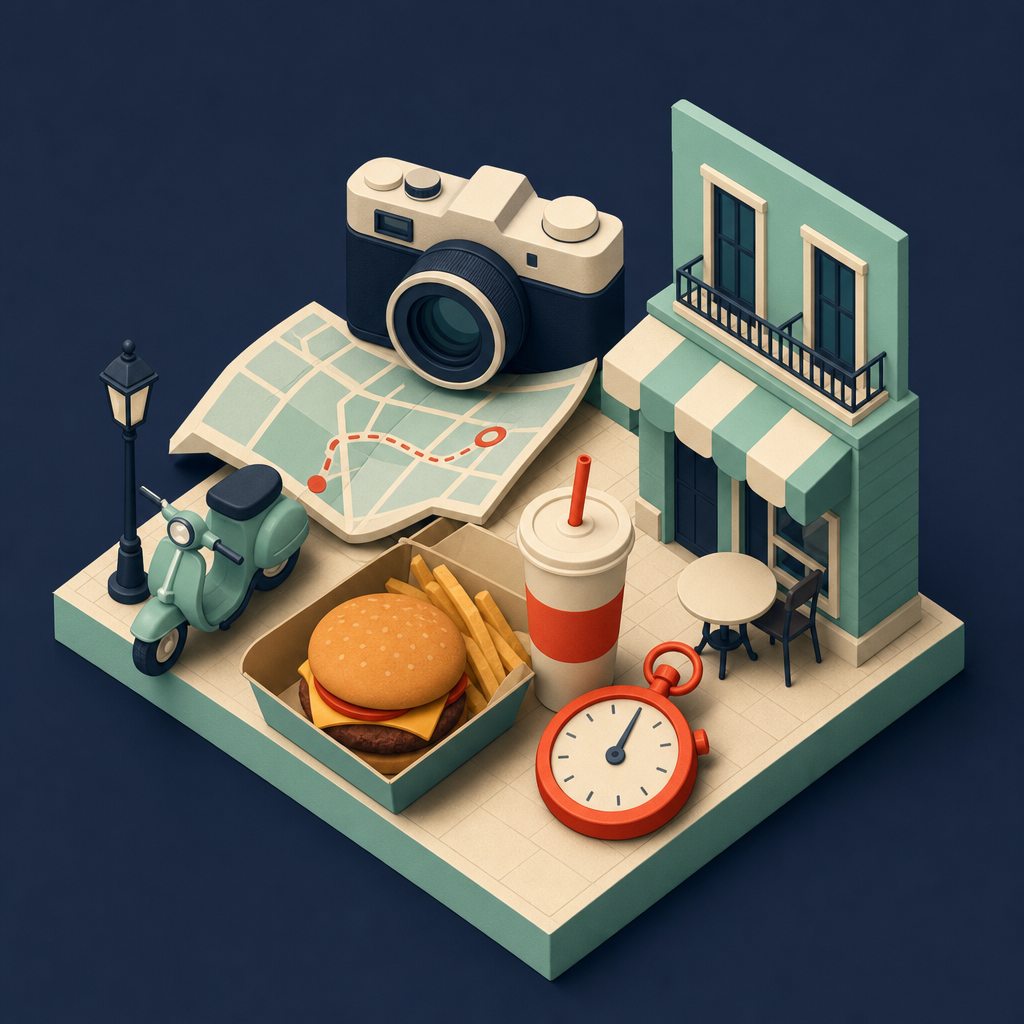
I’ve been on the road for the last five months, and I have to admit it, I have definitely put on some pounds.
The irregular eating times.
The clash between trying to see as many places as possible and eating proper meals.
The eating on the go, in the bus, while walking from Times Square to Rockefeller Centre.
You get what I mean.
And while I can blame a lot of factors that caused my weight gain, I honestly believe that I’ve put on some pounds because I wasn’t satisfied with what I ate. More specifically, I wasn’t eating slowly.
Which is why, in 2015, I made a promise to myself. I vow to start eating slowly. I will pay more attention to my food and take my time to consciously enjoy it. It has been five days since the new year, and I have to say it’s going pretty well.
If you’ve been reading the blog for a while, I’m about to do something very different this year. For my Monday posts, I will be uploading video that accompanies the article I’m writing, just for fun. I understand that all of us learn differently so if you’re like me and you learn better when you listen to something, then you’ll appreciate the video that comes along with it.
So here’s this week’s accompanying video – Eating For Weight Loss
If you prefer to read, then it’s okay too! I will still be writing as usual and you can continue reading below. I hope you like this change!
Let’s face it. We live in a rushed, too-busy and distracted society. From where I came from, Singapore that is, eating on a table on a workday seems very impossible. When I lived in North America, everyone was in a rush. We eat really fast and more often than not, we rarely take the time to enjoy our food and fully taste it. One bite, a few chews and then we swallow it.
We can even finish a meal in a few minutes.
Even I, as a sports and exercise nutrition coach, can become a victim of eating too fast.
But the thing is, I know that eating slowly can help promote better digestion. I know that we can easily maintain and even lose weight. And I know that eating slowly means you’re more satisfied with your meals. On the other hand, if you eat too fast, your digestion will be compromised. How does that happen?
Now let me explain.
Eating is quite a stressful thing for your body. If you rush through your food, it would seem like the meal is over too soon and so you naturally want to go for a second serve. When you do that, you’re not letting your natural satiety signals to kick in and when it finally does hit your body, you will feel too full, uncomfortable and overstuffed.
Slowing down to eat will definitely improve your overall health, fitness and well-being.
The benefits of eating slowly has been quite well researched over the last twenty years or so and here’s what slowing down at meal times can do for you.
Eating Slowly Improves Digestion
I’ve mentioned this earlier, eating slowly can help our very complicated body system to digest better.
See, digestion for your food begins even before you take the first bite. Digestion for your food begins when you think of the meal and when you see the food.
When you start salivating, that’s when digestion begins. Saliva contains digestive enzymes that will help break down the food you’re going to put into your mouth. As soon as this happens, our stomach will then prepare itself by secreting acid, our small intestines starts to be in ready mode and so on.
If we start to rush this process and eat faster than our systems can prepare itself, we’re forcing our body to deal with the surprise before it’s ready.
On top of that, large bites of food can make it difficult for the digestive enzymes in your body to turn the food into chyme which may cause indigestion from the moment you bite to the moment it gets excreted from your body. Don’t tell me you want that.
Eating Slowly Leads To Lesser Food Eaten
A study from the University of Rhode Island observed 60 adults eat a meal and how it effects digestion. The result?
The fast eaters consumed 1.1 ounces of food more per minute than slow eaters and they also take larger bites and chewed less before swallowing.
This means that not only you consume more food when you eat fast, you’re also taking in food that isn’t processed well enough as it should be.
Another University of Rhode Island study, researchers served a big plate of pasta along with a glass of water to 30 healthy women over two occasions. On the first visit, the subjects were told to eat slowly, put their utensils down between bites and eat to the point of comfortable fullness. On the second visit, they were told to eat as quickly as possible.
When they start comparing results, this is what they found:
When eating slowly, the subjects consumed an average of 579 calories in 29 minutes.
When eating quickly, the subjects consumed an average of 646 calories in 9 minutes.
That’s 67 more calories, and 20 minutes lesser!
Can you imagine how much more calories you’ll be consuming if you eat three meals a day quickly over a year?
Eating Slowly Helps Us Feel More Satisfied
Here’s the thing: even if you ate a simple cheese sandwich, you can leave the table feeling as though you ate a nice three-course meal.
Eating slowly gives your body time to tell you that you are full and believe it or not, it takes about twenty minutes from the start of a meal for the brain to send out satiety signals. Most of our meals don’t even last that long, especially if you’re rushing to eat them between meetings!
In the same University of Rhode Island study I mentioned earlier, the women, when eating quickly, reported more hunger an hour later than they did after eating slowly. More food and less satisfaction?
Eating slowly helps us feel more satisfied and is different that just being full. Enjoy every meal, appreciate every bite and leave the table feeling awesome.
That’s what it’s all about.
Eating Slowly Hydrates Better
Drinking water is one way to keep your body hydrated, which further helps our kidneys and bowels work more efficiently, improves the appearance of the skin and help maintain the balance of our body’s fluids.
That same University of Rhode Island study compares the amount of water the subjects drank and when the women ate slowly, they drank about 14oz of water compared to only about 9.7oz of water when they ate quickly.
Drinking water has also shown to have a lesser desire to eating and increased levels of satiety.
It’s a win-win situation.
Eating Slowly Helps Curbs Binge Episodes
I struggled with binge eating episodes a few years ago and while it wasn’t one of the best times of my life, I have learned that eating slowly during the binge can help shift our attention and refocus ourselves.
One of the key feature of binge eating is rapid eating and while we may not be able to stop eating during the episode, we can tell ourself to slow down and help get yourself back in the driver’s seat. Slowing down also helps you realize what’s happening and snap back into reality.
The next time you feel like the binge eating demons are taking over you, try and keep trying to slow down those cupcakes. It will help.
How To Put This Into Action
As I’ve mentioned in the start of this article, I have personally been affected by eating too quickly resulting in the weight gain. We know this: eating quickly does not do our body any good. We eat more than we need. We don’t digest properly. And we won’t be able to enjoy our food. I understand that for the bulk of us, we live a very hectic fast-paced life but even trying to eat slower on one of your meals in a week can help get you in the right frame of mind to make long lasting changes to this habit.
So here are some of the things I am planning to do, and you can too, to start eating slower and enjoy our foods even more:
- Sit down while eating, preferably on a chair, away from your desk or office.
- Make a simple prayer or say something to yourself before you start eating. This has nothing to do with faith or religion but more so that you will be more aware of what you’re about to do next.
- Put down your utensils between bites. I’ve been doing this over the last week and I find that it helps a lot in slowing down.
- Try to set a minimum number of chews per bite. This may seem awkward at first but try it out and see how it feels.
- Some people say using chopsticks is great, but coming from an Asian background, I don’t think it helps for me. You can of course, give it a go.
- Set aside at least 20-30 minutes for your meals. One good way I’ve found is putting on music from my favourite album which is about 45 mins long. I know that if I finish my meal when the last few songs is playing, it’s a good sign that I have eaten slowly.
If you find yourself rushing while trying to eat slowly, that’s okay. Get back to slowing down. Finding a ‘pacer’ like they do in marathon runs is also a good idea.
But the most important thing is this: It doesn’t matter which way you go, as long as it drives you towards your ultimate goal, that’s good enough.
And I believe slowing down when eating can help quite a lot in weight loss and weight maintenance.
Here’s To You
Are you naturally a slow eater or have you trained yourself to eat slowly? What are some of the techniques you use yourself to make sure you enjoy every meal? Share with us in the comment section below, I would love to hear from you.
If you need any more help please feel free to email me at aqilah@prettyawesomefitness.com. We’re all in a similar journey, might as well do it together.
Have a wonderful week!
X.
Aqilah.